#
Home Comfort Expert!
Eric Gans demonstrating bathroom fan installation in his garage workshop

Bathroom ventilation specialist serving Ellicott City

Bathroom Exhaust Fan Installation in Ellicott City, MD

A quiet fan is only half the job.

Hometrust installs and replaces bathroom exhaust fans while evaluating the duct, exterior termination, electrical connection, and air sealing. The goal is simple: move bathroom moisture outdoors—not into your attic.

  • Quiet Panasonic fan options
  • Replacement and new installations
  • Ducting and exterior termination evaluated
  • MHIC-licensed, BPI-certified contractor

4.8 rating on Google  •  100+ reviews  •  MHIC #158968

ERIC GANS Owner • Contractor • BPI Building Analyst

Common bathroom ventilation warning signs

Is Your Bathroom Fan Actually Doing Its Job?

These are five common signs that the fan, duct, or exterior venting may need a closer look.

The fan is loud

Noise proves the motor is running. It does not prove enough air is actually leaving the bathroom.

This sounds familiar

The mirror stays fogged

Lingering condensation can indicate insufficient airflow, a restricted duct, or a fan that is not running long enough.

This sounds familiar

Paint peels or mildew returns

Moisture that remains in the bathroom can affect ceilings, walls, trim, and finishes.

This sounds familiar

You cannot find an exterior vent

Some fans discharge into an attic or end at an inappropriate location instead of reaching the outdoors.

This sounds familiar

There is no fan at all

A new fan may require planning for electrical power, ceiling access, duct routing, and a proper exterior termination.

This sounds familiar
Recognize one of these problems? Request a Fan Estimate
 

See the work before you hire

What Actually Happens Above the Bathroom Ceiling?

This garage mock-up lets you see the hidden parts of a bathroom fan installation—before anyone cuts into your ceiling.

Field Demonstration 01 Panasonic WhisperFit • 17:38

100% inside-job installation demonstration

How to Install a Panasonic WhisperFit Bath Fan Like a Pro

Watch Eric demonstrate the ceiling opening, Flex-Z bracket, fan housing, duct connection, and electrical steps using a full-size garage mock-up.

  • Ceiling opening
  • Flex-Z bracket
  • Duct connection
  • Electrical setup
  • Finished grille

The grille is only the visible part. The quality of the hidden bracket, duct, wiring, and air sealing determines whether the installation really works.

Bathroom exhaust fan installation

This is a classic example of years of moisture exhausting directly into the roof sheathing, causing discoloration and shortening the roof system's life.

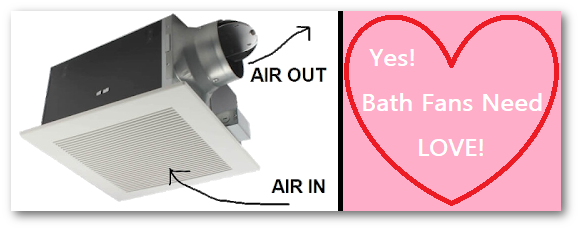
Bathroom ventilation fans draw out moisture and odor.  Did you know these devices can also be used to improve indoor air quality?  With speciality switches and timers, properly installed exhaust fans not only make for a more healthy bathroom, but bath fans can also improve a Maryland home's overall indoor air quality!

Building Analyst exhaust installation

We follow good building science principles
to guide our installation practices.

Services provided in Ellicott City, Maryland

More than a fan swap

A Complete Bathroom Exhaust System—From the Grille to the Outdoors

The fan, duct, exterior termination, air sealing, controls, and final airflow check all have to work together.

Bathroom Exhaust Fan Replacement Maryland

A quick look at why the complete venting system matters—not just the fan you see from inside the bathroom.

  • Quiet Fan
  • Sealed Duct
  • Outdoor Venting
  • Verified Airflow

The Hometrust approach

Complete Bathroom Exhaust Package

A bathroom fan sits at the intersection of moisture control, indoor air quality, electrical work, duct design, and the building enclosure. That is why a building-science and home-performance approach is a strong fit for this project.

1Fan Selection
2Duct Path
3Outdoor Termination
4Airflow Verification
What I evaluate before recommending the work
  • Measure the current bathroom-fan exhaust airflow.
  • Inspect the apparent exterior termination point and accessible duct path.
  • Look for duct condensation, “sweating,” staining, or moisture-related attic conditions.
  • Review access, wiring, ceiling conditions, and the likely installation route.
What a complete replacement package may include
  • Install a high-performance, low-noise bathroom exhaust fan.
  • Set the fan speed to match the bathroom and project conditions.
  • Air-seal the fan housing at the ceiling penetration.
  • Properly connect, seal, support, and insulate the exhaust duct where required.
  • Terminate the duct at an approved outdoor location included in the written scope.
  • Add an appropriate delayed-off timer or control when part of the project.
  • Check fan operation and verify final exhaust airflow after installation.
  • Provide a complimentary one-month airflow recheck for the completed package.

Standard package note: Up to 25 feet of exhaust ducting may be included. Final pricing and inclusions depend on access, electrical conditions, duct routing, the exterior termination, and the written project scope.

Two real-world demonstrations

See Where the Air Goes. Then Watch It Move.

First, follow the exhaust path through the attic and roof. Then watch the fan capture bathroom air at the grille.

Field Demonstration 01 Roof Venting • Exterior Termination

The complete pathway to the outdoors

See How a Bathroom Fan Is Vented Through the Roof

Follow the steps involved in routing a bathroom exhaust duct through the attic and connecting it to a dedicated roof termination so bathroom moisture is discharged outside the home.

  • Attic duct route
  • Roof penetration
  • Exterior vent cap
  • Sealed connections
  • Moisture removal

The fan needs a complete path outdoors. A quiet fan cannot protect the home properly when the duct ends in the attic, leaks at its connections, or is restricted before reaching the exterior.

Field Test 02 Vapor Test • Visual Airflow

Make invisible airflow visible

Watch a Bathroom Fan Pull Vapor Toward the Grille

This quick visual demonstration uses vapor to reveal the direction of airflow as the fan draws air from the bathroom toward the exhaust grille.

  • Airflow direction
  • Capture at grille
  • Visual fan test
  • Real-world operation
  • Performance clues

Useful for direction—not measurement. A vapor test can show air moving toward the fan, but measured airflow and verification of the outdoor duct path tell the complete story.

Installation Detail 03

A Quiet Fan Still Needs a Tight Ceiling

Watch the attic-side detail that closes the gap between the bathroom fan housing and the ceiling air barrier.

Air-Sealing Demonstration Attic Side • Ceiling Penetration

The detail hidden above the ceiling

How to Air Seal a Bathroom Exhaust Fan

Open on YouTube

Ceiling Air-Barrier Detail

Seal the Gap Around the Fan Housing

Installing the fan is only part of the project. The opening around the metal housing can become an uncontrolled pathway between the bathroom and attic when it is left unsealed.

01
Reduce uncontrolled air leakage

Close the gap where conditioned indoor air can escape around the housing.

02
Limit humid air reaching attic cavities

Reducing air movement through the ceiling can help lower the chance of moisture reaching colder attic surfaces.

03
Keep the insulation layer more continuous

The fan housing, ceiling air barrier, duct, and surrounding insulation should work as one coordinated assembly.

Air-sealing materials, clearances, and methods should be appropriate for the fan housing, surrounding materials, and project conditions.

The fan is only one part of the system

Yes—Bathroom Fans Really Do Need This Much Attention

A bathroom fan does more than clear a foggy mirror. Moisture control depends on the fan, duct, ceiling air seal, exterior termination, and final airflow all working together.

Five things homeowners often miss

The fan can run—and still fail to solve the problem

These details explain why replacing the visible grille is not always the same as correcting the ventilation system.

  1. 01 The duct needs to terminate outdoors

    Bathroom moisture should not be discharged into an attic, enclosed cavity, or another part of the home.

  2. 02 Cold attic ducts can collect condensation

    Poorly insulated, sagging, or improperly routed ductwork can allow moisture to collect inside the duct.

  3. 03 Different fans move different amounts of air

    Model, speed setting, duct length, elbows, restrictions, and installation quality all affect actual airflow.

  4. 04 Noise does not prove the fan is working well

    A loud motor can still move too little air. Sound alone is not a meaningful performance test.

  5. 05 The ceiling opening can become an air leak

    Gaps around the fan housing can create an uncontrolled pathway between the conditioned home and the attic.

The answer

Create one complete path from the bathroom to the outdoors

The system should capture humid air at the grille and move it through a sealed, supported duct to a dedicated exterior cap.

Bathroom grille Sealed duct Exterior cap captures humid air moves it through the attic releases it outdoors
  1. 1Capture air at the grille
  2. 2Move it through the duct
  3. 3Seal and insulate the path
  4. 4Discharge it outdoors

What a properly installed bathroom exhaust system should include

Every house is different, but these are the core details that should be addressed in the written project scope.

  • A quiet fan selected and set for the bathroom and duct conditions
  • A short, smooth, supported duct route with unnecessary restrictions avoided
  • Sealed duct joints and a properly connected fan collar
  • Insulated ductwork where it passes through unconditioned spaces
  • A dedicated roof or wall termination designed for exhaust airflow
  • Air sealing around the housing and a final fan-operation or airflow check

Not sure whether your current fan has a complete path outdoors?

Request a Fan Evaluation

Straight answers before you schedule

Bathroom Exhaust Fan Questions, Answered

These are the questions Ellicott City homeowners most often ask about bathroom exhaust fan replacement, new installations, ducting, outdoor venting, noise, moisture, and airflow.

  • Maryland Licensed Contractor
  • MHIC #158968
  • BPI Certified
  • Contractor Since 2006
01How can I tell whether my bathroom exhaust fan vents outdoors?

Look for a dedicated roof or wall cap that opens when the fan runs, but visual identification is not always conclusive. The most reliable evaluation follows the duct from the fan toward its termination whenever access allows. An attic inspection may reveal a disconnected duct, a crushed section, an open end, or a connection to the wrong exterior fitting.

02Is it okay for a bathroom exhaust fan to vent into the attic?

No. A bathroom fan is intended to carry humid air to the exterior. Discharging moisture into an attic or enclosed cavity can contribute to condensation, staining, damp insulation, and moisture-related damage. The correct remedy depends on the existing fan, duct route, attic access, and the safest location for a dedicated outdoor termination.

03Can you replace a bathroom fan that is noisy, weak, or no longer working?

Yes. A replacement project begins by evaluating the existing fan, power, controls, duct connection, accessible ductwork, and apparent exterior termination. A noisy motor may justify replacement, but poor airflow can also result from a restricted duct, stuck damper, loose connection, or unsuitable termination—not just the fan itself.

04Can you install a bathroom exhaust fan where there is no existing fan?

Often, yes. A new installation requires a workable ceiling location, electrical power, an appropriate switch or control, a practical duct route, and an acceptable outdoor termination. Attic access usually makes planning easier. Bathrooms between finished floors may require a different approach because the framing, wiring, and duct path are less accessible.

05What is included in a complete bathroom exhaust fan installation?

The written scope may include fan selection, removal of the old unit, electrical connections, ceiling-housing air sealing, a sealed and supported duct connection, duct insulation where appropriate, a roof or wall termination, controls, and a final operation or airflow check. The exact package depends on the conditions found in your home.

06Do you install quiet Panasonic bathroom fans and fan-light combinations?

Hometrust commonly works with quiet Panasonic bathroom-fan options, including models designed for replacement and retrofit situations. Fan-light combinations may also be possible. The right model depends on the bathroom, ceiling access, duct size, desired airflow, lighting needs, and the existing wiring and switch arrangement.

07Should bathroom exhaust ductwork be insulated and air sealed?

Duct joints should be properly connected and sealed so humid exhaust air does not leak before reaching the outdoors. Ductwork passing through an unconditioned attic commonly needs appropriate insulation to reduce the chance of condensation inside the duct. The ceiling opening around the fan housing should also be air sealed with materials suitable for the assembly.

08How much does bathroom exhaust fan installation cost in Ellicott City?

Cost depends on whether the project is a straightforward replacement or requires new electrical work, a longer duct route, attic access, drywall modifications, a roof or wall termination, or correction of existing defects. Hometrust reviews the likely scope and provides a written estimate so the included work is clear before the project is scheduled.

09How long does a bathroom fan replacement or new installation take?

Timing varies with access and scope. Replacing a fan that already has usable wiring, ducting, and a proper exterior termination is generally more straightforward than creating a completely new system. New duct routing, roof or wall work, electrical changes, or difficult ceiling access can add time. Your estimate should identify the expected project conditions.

10Can a bathroom fan use a timer, humidity control, or the same switch as the light?

Often, but the best control depends on the existing wiring and how the bathroom is used. A delayed-off timer can keep the fan running after a shower, while a humidity-sensing control may automate operation. A fan and light can sometimes share a switch, or they can be controlled separately when the wiring and project scope allow.

11How do you verify that a bathroom exhaust fan is actually working?

A complete check looks beyond sound. It may include confirming fan and control operation, observing the damper, reviewing the accessible duct path, checking the exterior termination, and evaluating airflow at the grille. When airflow measurement is part of the project scope, it provides more useful information than simply listening to the motor.

12What areas do you serve for bathroom fan installation?

This page is focused on bathroom exhaust fan installation in Ellicott City, Maryland. Hometrust also serves selected surrounding communities within its Maryland service area. Submit your service ZIP code through the estimate form, or review the Maryland bathroom exhaust fan service page for broader service information.

Ready for the next step?

Give Bathroom Moisture a Clear Path Out of Your Home

Tell me what your fan is doing, how many bathrooms are involved, and your service ZIP code. I will review the likely scope and contact you about the next step.

  • Quiet fan options
  • Complete duct-path evaluation
  • Maryland licensed contractor
  • Real installation experience
    Specialized Maryland Contractor


    • MHIC Licensed
    • Building Analyst Certified
    • Envelope Professional Certification
    • EPA Lead Renovator Certified
    • YouTube Learning Channel


    Our mission is to help Maryland homeowners create a more comfortable home and save energy. We achieve this by applying building science principles and modern air sealing and insulating techniques.


    Google Reviews

    Services & Service Areas

    SERVICE AREA COUNTIES
    Anne Arundel County, Baltimore County, Baltimore City, Carroll County, Harford County, Howard County, Montgomery County, Prince George's County


    hometrust is an energy star partner

    Contact Us
    our facebook page linkdin youtube

    MHIC License #158968
    Approved BGE Energy Contractor
    Approved Pepco Energy Contractor


    MHIC 158968
    8345 Sperry Court
    Laurel, MD 20723
    301.957.6532
    info@hometrustremodeling.com


    Hometrust Remodeling

    Proudly working in BGE & Pepco's Home Performance w/ ENERGY STAR program in Maryland to deliver whole-house energy savings to improve comfort & help protect the environment.
    2026 Hometrust Remodeling | All Rights Reserved

    An Energy Auditor's Purpose 
    "Energy auditors visit residential buildings and talk to owners and residents.  They inspect, test, and measure to decide what energy-efficient retrofits are practical and cost-effective." Residential Energy